Real apps. Live datasets. Agent-maintained intelligence.
These use cases show how Inflectiv powers vertical applications with structured datasets, MCP workflows, and bi-directional API access. Each app turns messy information into a living data layer that can be queried, updated, and reused.

One architecture. Many vertical apps.
Each use case starts with the same foundation. An agent creates or connects to an Inflectiv dataset through MCP, structures domain-specific information, and keeps that dataset updated over time. The application reads from the latest version of the dataset, while agents write new learnings back through the bi-directional API.
Messy sources
Web, docs, PDFs, and raw signals.
Agent scan
MCP-driven ingestion and structuring.
Inflectiv dataset
A clean, queryable knowledge layer.
App experience
The product reads the latest version.
Agent write-back
New learnings flow back in.
Reusable API
Open to agents and other builders.
Step 05 writes back into step 03, so the dataset the app reads is the one the agent just improved.
The app is not the data lab. The dataset is the product layer. Apps, agents, and developers all work from the same structured intelligence.
Live applications running on Inflectiv.
Each app uses structured datasets, MCP, and bi-directional APIs to keep its intelligence current.
MedQuery
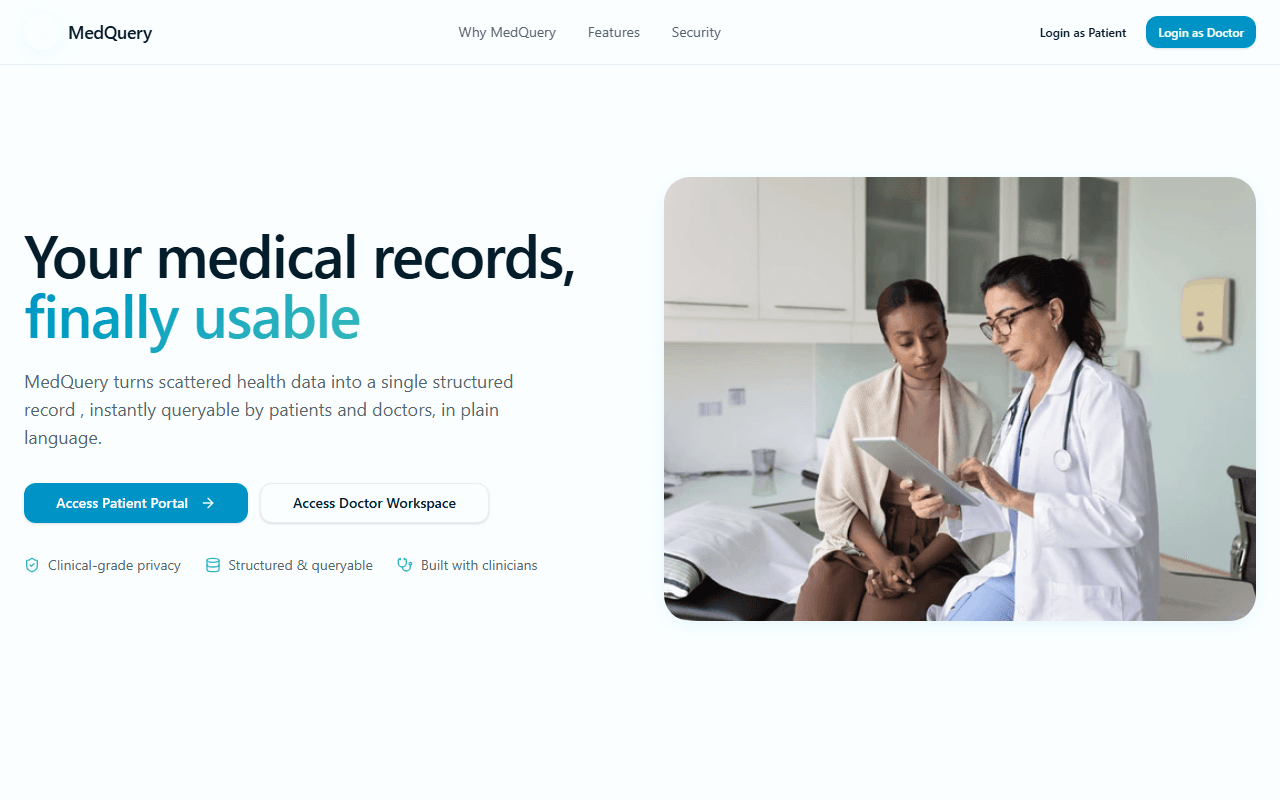
Healthcare Data Intelligence
Turn scattered health records into one structured patient dataset.
Digital Advisory
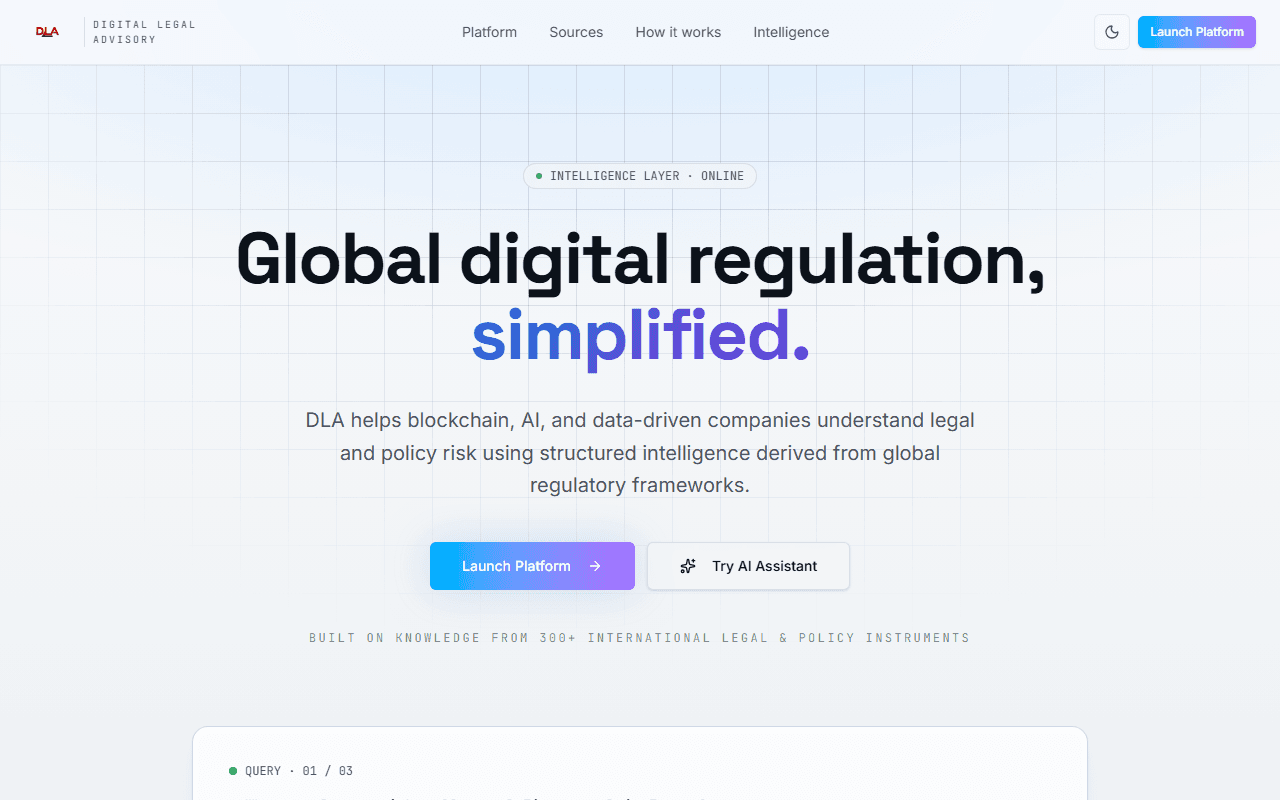
Legal & Policy Intelligence
Global digital regulation, simplified through structured legal intelligence.
Reputation Graph
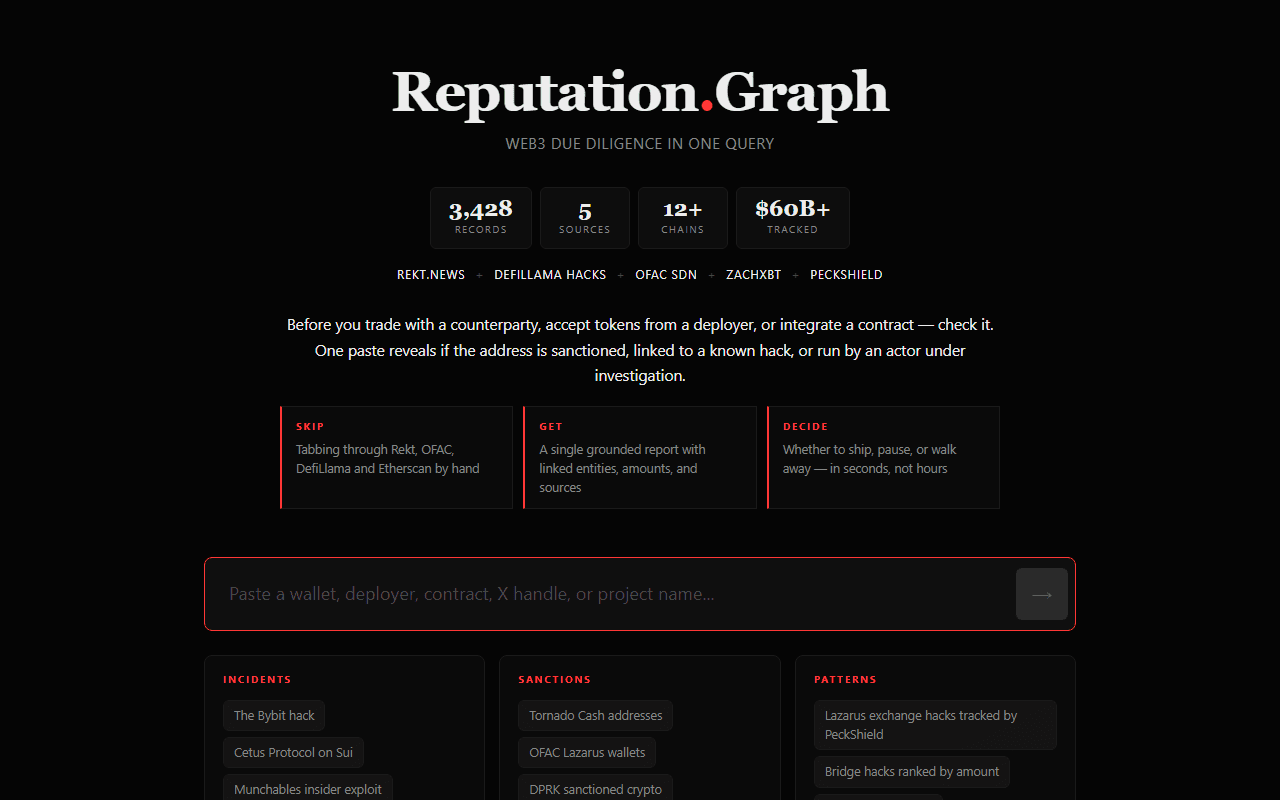
Web3 Due Diligence
Check wallets, actors, exploits, sanctions, and risk signals in one query.
Compliance Radar
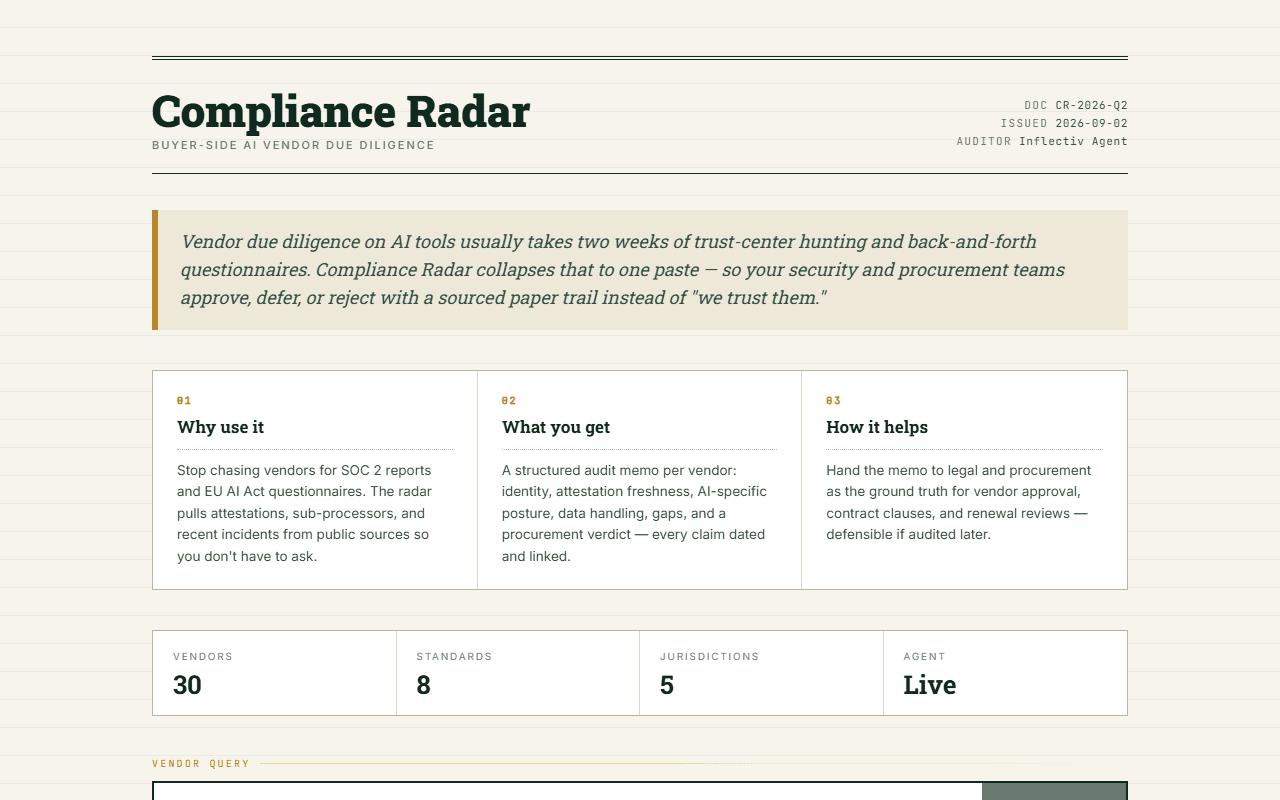
AI Vendor Compliance
Buyer-side AI vendor due diligence with sourced compliance memos.
VC Portfolio Intel
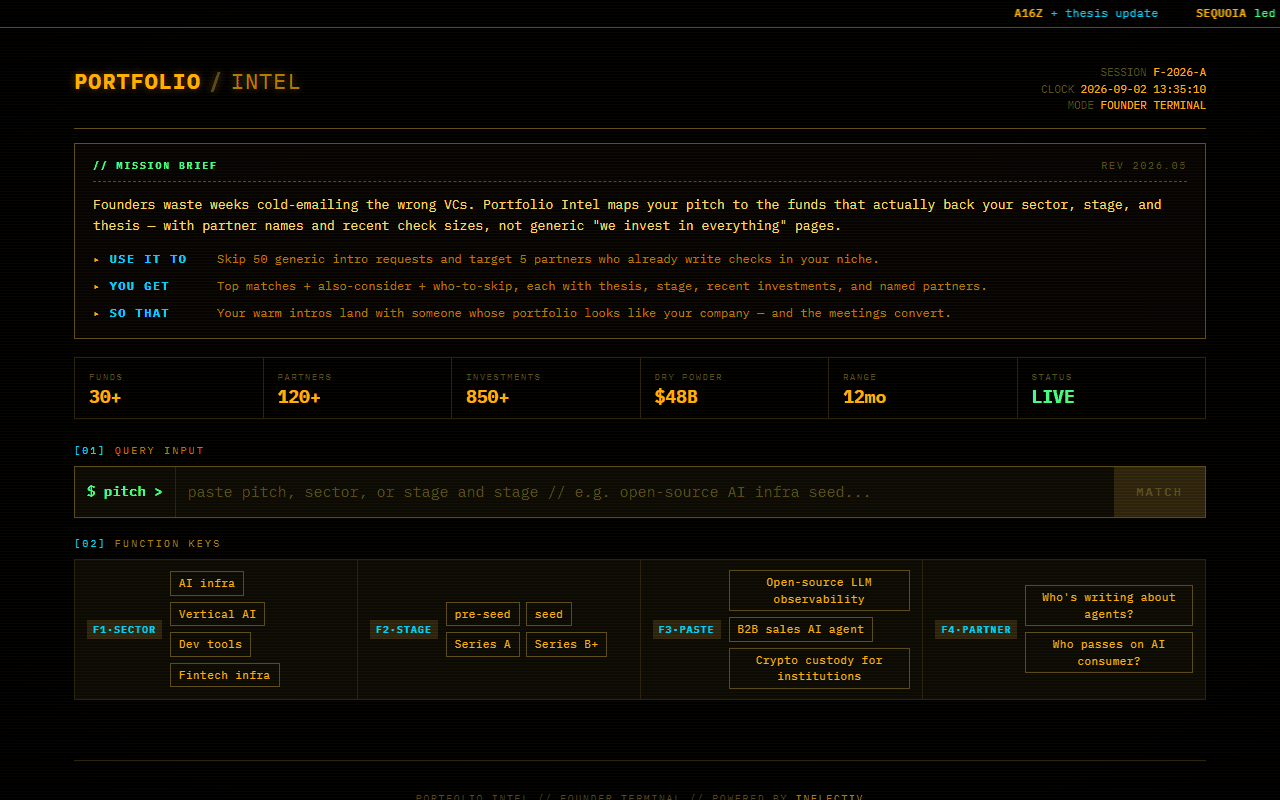
VC Matching Intelligence
Match your pitch to funds and partners that actually invest in your category.
VoiceVault
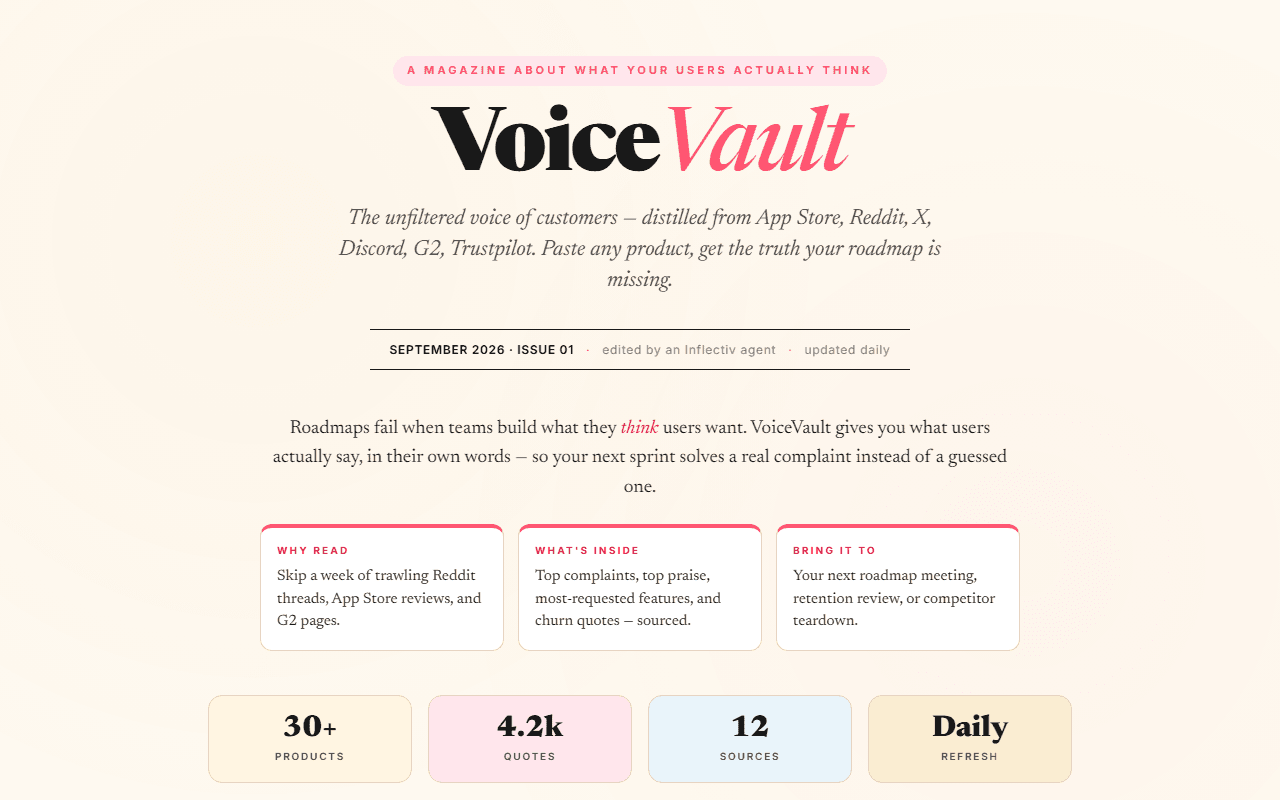
Customer Intelligence
The unfiltered voice of customers, distilled from reviews and social channels.
How each app uses Inflectiv.
The same three questions of every one of them: what was broken, what the dataset holds, and what the agent does to it.
Healthcare Data Intelligence
MedQuery
Private patient record datasetMedQuery uses one private Inflectiv dataset per patient. Records are structured into a single queryable source of truth, while patients and doctors see different interfaces on top of the same data.
The problem
Patients and doctors deal with fragmented medical records spread across portals, PDFs, labs, notes, and clinic systems.
The dataset
Medical documents, lab results, doctor notes, medications, conditions, timeline data, and approved updates.
The agent
Ingests documents, structures health information, answers patient and doctor queries, and writes approved clinical notes back into the patient dataset.
Why it matters
Patients get plain-language clarity. Doctors get clinical depth. Both work from the same structured record.
Legal & Policy Intelligence
Digital Advisory
Regulatory and policy intelligence datasetDigital Advisory turns global legal and policy material into a structured regulatory intelligence dataset.
The problem
Digital regulation is scattered across jurisdictions, legal frameworks, policy instruments, trade agreements, and institutional guidance.
The dataset
Regulatory domains, jurisdictions, policy instruments, AI regulation, data privacy, cybersecurity, digital finance, competition, and trade rules.
The agent
Collects policy sources, structures legal domains, maps overlaps, and generates context-aware answers from grounded regulatory data.
Why it matters
Founders, compliance teams, and legal operators can understand digital risk without manually parsing hundreds of legal documents.
Web3 Due Diligence
Reputation Graph
Web3 reputation and risk datasetReputation Graph structures risk signals from exploit databases, sanctions lists, investigations, and public incident reports into a queryable due diligence layer.
The problem
Web3 teams need to understand wallet, contract, and counterparty risk before accepting funds, integrating contracts, or trading with unknown entities.
The dataset
Exploit records, sanctioned addresses, incident sources, linked entities, amounts, chains, investigations, and source references.
The agent
Aggregates and updates records from trusted public sources, links related entities, and produces grounded due diligence reports.
Why it matters
One query can surface whether an address, actor, or entity is linked to known hacks, sanctions, exploit patterns, or investigations.
AI Vendor Compliance
Compliance Radar
AI vendor compliance datasetCompliance Radar structures vendor compliance data into sourced audit memos for buyer-side review.
The problem
AI vendor due diligence takes too long because procurement and security teams have to chase trust centers, SOC 2 reports, AI policy pages, and sub-processor lists manually.
The dataset
Vendor identity, attestations, sub-processors, AI posture, data handling, incidents, jurisdictions, standards, gaps, and procurement verdicts.
The agent
Pulls public vendor compliance signals, tracks attestation freshness, checks policy gaps, and prepares structured audit memos.
Why it matters
Teams can approve, defer, or reject vendors with a source-backed compliance trail instead of relying on generic trust claims.
VC Matching Intelligence
VC Portfolio Intel
VC portfolio and thesis datasetVC Portfolio Intel maps founder pitches against a structured dataset of funds, partners, thesis areas, stages, investments, and check sizes.
The problem
Founders waste weeks targeting the wrong investors because most VC websites sound generic.
The dataset
Funds, partners, portfolio companies, investment stages, sectors, check sizes, recent deals, fund thesis, and who-to-skip signals.
The agent
Tracks VC portfolio activity, updates fund theses, maps recent investments, and matches founder pitches to relevant investors.
Why it matters
Founders can target investors whose portfolio and thesis actually match their company.
Customer Intelligence
VoiceVault
Customer feedback and product sentiment datasetVoiceVault structures customer feedback into a living dataset of complaints, praise, requested features, churn quotes, and competitive signals.
The problem
Product teams often build from assumptions while real customer complaints are spread across reviews, Reddit, X, Discord, G2, Trustpilot, and App Store pages.
The dataset
Customer quotes, complaints, praise, feature requests, churn signals, product categories, source links, and daily updates.
The agent
Collects public feedback, structures it by product and category, updates trends daily, and surfaces what users actually say.
Why it matters
Teams can bring real customer language into roadmap planning, retention reviews, and competitor teardowns.
Different apps. Same Inflectiv core.
Dataset-First Architecture
Every app sits on a structured Inflectiv dataset, not a one-off database.
Agent-Maintained Knowledge
Agents scan, structure, and refresh the data through MCP over time.
Bi-Directional API
Apps read the latest data; agents write new learnings straight back.
Vertical Intelligence
Each app turns one messy domain into usable, queryable intelligence.
Build your own vertical intelligence app.
Pick a messy knowledge domain. Let an agent structure the data into Inflectiv. Build a focused application on top. Then let the same dataset stay alive through MCP, bi-directional API access, and agent write-back.